

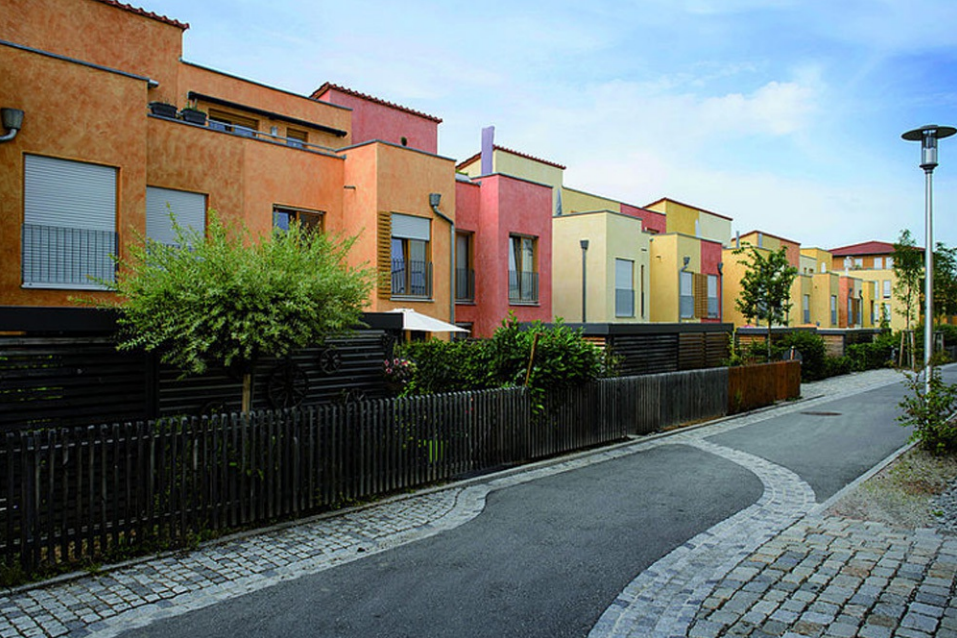
Water glass is a natural product that has been used since the time of the ancient Egyptians and Byzantines for the protection of architectural structures.
It was studied in 1820 by the German scientist J. N. von Fuchs, while in 1878 A. W. Keim received the first patent in Berlin for his work on the application of inorganic paints on murals, with water glass as the main binder.
Since then, the composition and application techniques of water glass have evolved, and its applications have increased dramatically.
Silicate paints consist of water-soluble, inorganic silicates of sodium, lithium and potassium — Na, Li, K. The most commonly used silicate in coatings is sodium silicate — Na₂SiO₃.
Silicate paints offer several advantages, which contribute to their growing popularity.
First of all, they have excellent adhesion to a wide range of substrates, including:
- Metals.
- Glass.
- Ceramics.
- Concrete.
This high adhesion is due to the formation of a chemical bond during drying between the silicate in the coating and the surface of the substrate.
However, this characteristic also defines the most important limitation in the use of water glass.
Since water glass reacts chemically with the substrate, applying it over common acrylic paints would not allow the necessary reaction to take place, leading to poor adhesion and performance problems.
In addition, the different drying and film-forming mechanisms of the two coatings would lead to incompatibility and the formation of cracks or peeling.
For this reason, it is generally recommended to avoid the application of silicate paints over acrylic paints, in order to ensure proper material performance.
Beyond this limitation, water glass offers excellent resistance to environmental factors, such as ultraviolet radiation, as well as very good chemical resistance and thermal stability.
These characteristics ensure extended service life and reduce the need for frequent reapplication. As a result, maintenance costs for buildings are reduced.
In addition, inorganic silicates form vapour-permeable films, allowing moisture within the substrate to escape while at the same time preventing water penetration from the outside.
This breathability helps prevent moisture-related problems, such as:
- Blistering.
- Peeling.
- Mould growth.
The inorganic nature of the material further prevents the growth of microorganisms.
Silicate paints are alkaline and have a high pH. This property makes it necessary to use inorganic pigments for their colouring.
As a result, these paints show excellent colour stability over time and high resistance to fading caused by solar radiation, which often affects organic pigments.
Furthermore, water glass has inherent fire-resistant properties due to its inorganic composition.
It does not contribute to flame spread and helps delay the ignition of surrounding materials, thereby enhancing the fire safety of buildings.
Finally, silicate coatings contribute to sustainable construction practices.
These materials do not contain volatile organic compounds — VOCs — or hazardous components. They are therefore considered environmentally friendly alternatives to traditional materials containing organic solvents.
They also have minimal impact on indoor air quality and are often used in building projects aiming to obtain LEED — Leadership in Energy and Environmental Design — certification.
In short, water glass is a material that combines:
- Durability.
- Vapour permeability.
- Fire resistance.
- A sustainable environmental profile.
These characteristics make silicate materials a suitable choice for architectural applications that require long-lasting and high-performance coatings.
References
[1] Sarcinella, A., & Frigione, M. (2023). Sustainable and Bio-Based Coatings as Actual or Potential Treatments to Protect and Preserve Concrete. Coatings, 13(1), 44.
[2] Gettwert, G., Rieber, W., & Bonarius, J. (1998). One-component silicate binder systems for coatings. Surface Coatings International, 81, 596.
Original publication: Architect magazine, May–June 2023 issue.