

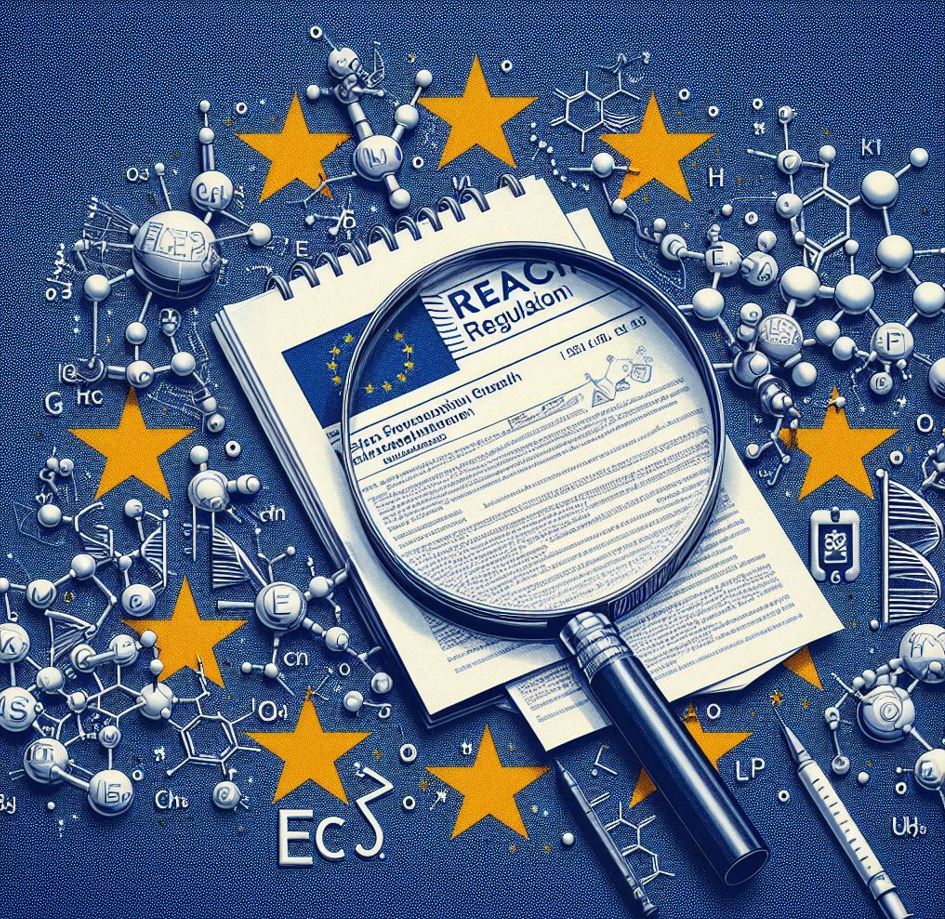
The REACH Regulation — Registration, Evaluation, Authorisation and Restriction of Chemicals — is one of the most important legislative frameworks of the European Union for the management of chemical substances.
Its main objective is to improve the protection of human health and the environment from the potential risks arising from the use of chemicals, while also promoting innovation and competitiveness in the chemical industry.
The regulation entered into force on 1 June 2007 and replaced several previous EU directives and regulations with a single, coherent legislative framework.
Key Elements of the REACH Regulation
The REACH Regulation requires companies that manufacture or import chemical substances into the EU in quantities above one tonne per year to register these substances with the European Chemicals Agency — ECHA.
The registration process includes the submission of information on:
- The properties of the substances.
- Their uses.
- Their potential effects on human health.
- Their potential effects on the environment.
The aim is to ensure that companies understand and manage the risks associated with their chemical substances.
Evaluation Process
Evaluation is a critical part of REACH.
ECHA, in cooperation with the national authorities of Member States, evaluates the information submitted by companies in order to ensure that chemical substances meet safety standards.
If there are doubts or gaps in the information provided, companies may be asked to submit additional data.
This process helps ensure that the risks associated with chemical substances are understood and can be adequately controlled.
Authorisation and Restrictions
Authorisation is another important pillar of REACH.
Certain substances considered to be of very high concern — such as carcinogenic, mutagenic or toxic to reproduction substances — are subject to strict authorisation.
This means that these substances cannot be used in the EU without prior authorisation.
Authorisation is granted only if the company can demonstrate that:
- The risks associated with the use of the substance can be controlled; or
- The benefits of using the substance outweigh the risks.
In addition to authorisation, the REACH Regulation also includes restrictions on the use of specific substances.
These restrictions may concern:
- The use of a substance in specific applications.
- The complete prohibition of a substance.
Restrictions are applied when it is established that the risks arising from the use of a substance cannot be effectively addressed by other measures.
Benefits of the REACH Regulation
One of the main benefits of REACH is the improvement of knowledge about chemical substances and their effects.
This knowledge helps companies and regulatory authorities make evidence-based decisions on the management of risks associated with chemical substances.
In addition, the regulation encourages the development of innovative and safer chemical products, as companies seek alternatives to hazardous substances.
Another important benefit is the increased transparency and public trust in the chemical industry.
Consumers now have access to more information about the chemical substances used in everyday products, which strengthens their confidence in these products and in the companies that manufacture them.
Challenges and Criticism
The REACH Regulation is not without challenges.
Small and medium-sized enterprises — SMEs — in particular have expressed concerns about the cost and complexity of the registration and evaluation process.
The requirement to provide extensive data can be costly and time-consuming, creating potential barriers for smaller companies.
Despite these challenges, support mechanisms exist for SMEs, including guidance from ECHA and financial incentives.
ECHA also provides training and tools to help companies comply with the requirements of the regulation.
Conclusion
The REACH Regulation is a cornerstone of the European Union’s effort to ensure a high level of protection for human health and the environment from risks associated with chemical substances.
Despite the challenges it presents, REACH’s integrated approach to the registration, evaluation, authorisation and restriction of chemicals has brought significant benefits, promoting safety and innovation in the chemical industry.
The regulation also strengthens public trust in products containing chemical substances by providing transparency and information on the risks and benefits of these substances.