
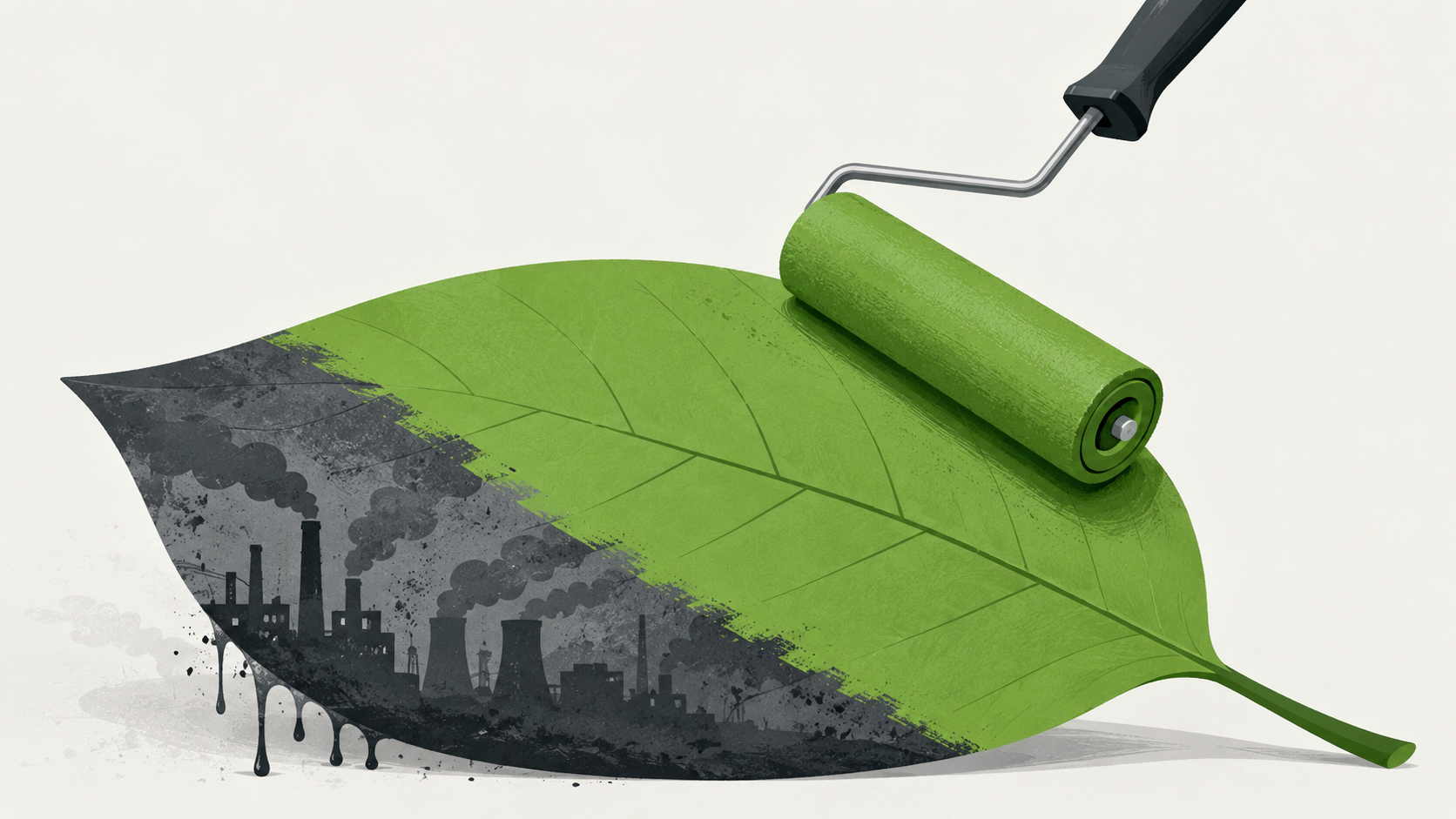
The era of vague green marketing claims is drawing to a close. With Law 5317/2026, published in the Greek Government Gazette on 10 July 2026, Greece incorporated Directive (EU) 2024/825 into national legislation and strengthened consumer protection against misleading environmental claims.
The relevant provisions are included in Articles 79 to 90 of the new law and amend Law 2251/1994 on consumer protection. Their impact extends well beyond conventional advertising. Product labels, technical brochures, websites, social media posts, sales presentations and even product names may now fall within the scope of environmental claims.
An important distinction is needed. Law 5317/2026 does not incorporate the separate proposed Green Claims Directive, which is intended to introduce more detailed rules for the substantiation and verification of explicit environmental claims. It implements the Directive on empowering consumers for the green transition. Nevertheless, the practical consequences for product communication are already significant.
What qualifies as an environmental claim?
The definition is deliberately broad. An environmental claim may consist of text, an image, a symbol, a graphic element, a label, a product name or a company name. It is enough for the message to state or imply that a product has a positive or neutral environmental impact, causes less environmental harm than competing products, or has improved its environmental performance over time.
Terms such as “green”, “eco-friendly”, “environmentally friendly” or “climate friendly” can no longer be treated as harmless marketing language. A general environmental claim must be supported by recognised excellent environmental performance that is relevant to the specific claim.
This may include, for example, certification under the EU Ecolabel or another officially recognised Type I ecolabelling scheme developed according to ISO 14024 principles. The evidence must support the exact message being communicated. A certification related to one product characteristic does not automatically justify a broad claim about the environmental performance of the whole product.
Practices that are now prohibited
The new framework introduces several commercial practices that are prohibited in all circumstances.
Companies may not use sustainability labels that are not based on a genuine certification scheme or established by a public authority. Self-created green logos, leaf symbols or environmental seals may therefore become problematic when they resemble formal certification but lack independent criteria, governance and verification.
It is also prohibited to present an entire product or company as environmentally preferable when the claimed advantage relates only to a limited aspect of the product. A paint cannot be marketed as broadly “sustainable”, for example, merely because its packaging contains recycled plastic or because one raw material has been replaced.
Particular attention should also be paid to claims such as “carbon neutral” or “climate neutral”. Such claims cannot be made for a product when they are based on greenhouse gas offsetting rather than on the product’s actual lifecycle performance.
Claims concerning future environmental performance are also subject to stricter requirements. Commitments such as “net zero by 2035” or “fully circular production by 2030” must be supported by clear, public and verifiable commitments, measurable targets, a detailed implementation plan, an appropriate timeline and regular independent verification.
What does this mean for the coatings industry?
For manufacturers of paints, varnishes, coatings and construction materials, compliance cannot be limited to checking the product label. Every form of commercial communication should be reviewed.
Statements such as “water-based, therefore ecological”, “low environmental footprint”, “reduced carbon product” or “made with recycled materials” require a clearly defined scope and suitable evidence. The company should be able to explain what was measured, which method was used, which reference product was selected, which functional unit was applied and which lifecycle stages were included.
Selective communication also creates risk. Highlighting a favourable indicator while ignoring other significant environmental impacts may give consumers a misleading overall impression.
An Environmental Product Declaration can provide valuable, independently verified lifecycle data. However, the existence of an EPD does not automatically make a product “eco-friendly”, nor does it prove that the product performs better than alternatives. Comparative claims require comparable data, consistent system boundaries and an appropriate basis for comparison.
The same principle applies to VOC content. Compliance with a mandatory legal VOC limit should not be presented as a unique environmental benefit. A legal requirement that applies to all products in the same category cannot be advertised as though it were a special advantage of one manufacturer.
Environmental claims need formal approval
Companies now need an internal process for reviewing and approving environmental claims. R&D, Regulatory Affairs, LCA specialists and Marketing should not work independently on these issues.
Each claim should be supported by a documented file containing its exact wording, scope, supporting evidence, calculation method, data source, date of assessment and responsible approver. The review should cover not only technical accuracy, but also the overall impression created for the consumer.
The risk is not limited to administrative penalties. Under the new provisions, decisions involving fines above EUR 50,000, as well as repeated infringements regardless of the fine, may disclose the company’s name, the nature of the infringement, the product code and the commercial name of the product concerned.
Greenwashing therefore creates a combined regulatory, commercial and reputational risk.
For the coatings industry, the right response is not to stop communicating environmental performance. It is to replace broad green language with precise, measurable and verifiable claims. Environmental communication must now be treated with the same technical discipline as product performance, safety and regulatory compliance.
References
- Νόμος 5317/2026: Ενδυνάμωση της προστασίας των καταναλωτών στους τομείς των συμβάσεων πιστώσεων, των χρηματοοικονομικών υπηρεσιών και των συμβάσεων που συνάπτονται εξ αποστάσεως, εκτός καταστήματος και ηλεκτρονικά: Ενσωμάτωση των Οδηγιών (ΕΕ) 2017/828, 2023/2225, 2023/2673, 2024/825, 2024/1799 και 2026/74 και λοιπές διατάξεις. Εφημερίδα της Κυβερνήσεως της Ελληνικής Δημοκρατίας, Τεύχος Α΄, 108/10.07.2026, 5143–5266.
- European Commission. (2023). Proposal for a Directive of the European Parliament and of the Council on substantiation and communication of explicit environmental claims (Green Claims Directive) [COM(2023) 166 final, 2023/0085(COD)]. https://eur-lex.europa.eu/legal-content/EN/TXT/?uri=COM%3A2023%3A166%3AFIN
- European Parliament, & Council of the European Union. (2005). Directive 2005/29/EC concerning unfair business-to-consumer commercial practices in the internal market. Official Journal of the European Union, L 149, 22–39. https://eur-lex.europa.eu/eli/dir/2005/29/oj/eng
- European Parliament, & Council of the European Union. (2010). Regulation (EC) No 66/2010 on the EU Ecolabel. Official Journal of the European Union, L 27, 1–19. https://eur-lex.europa.eu/eli/reg/2010/66/oj/eng
- European Parliament, & Council of the European Union. (2011). Directive 2011/83/EU on consumer rights, amending Council Directive 93/13/EEC and Directive 1999/44/EC and repealing Council Directive 85/577/EEC and Directive 97/7/EC. Official Journal of the European Union, L 304, 64–88. https://eur-lex.europa.eu/eli/dir/2011/83/oj/eng
- European Parliament, & Council of the European Union. (2024). Directive (EU) 2024/825 amending Directives 2005/29/EC and 2011/83/EU as regards empowering consumers for the green transition through better protection against unfair practices and through better information. Official Journal of the European Union, L, 2024/825. https://eur-lex.europa.eu/eli/dir/2024/825/oj/eng
- International Organization for Standardization. (2026). Environmental statements and programmes for products: Ecolabels (ISO Standard No. 14024:2026). https://www.iso.org/standard/72458.html